Chinese calendar · Beijing time
November 18, 2026
Message of the day
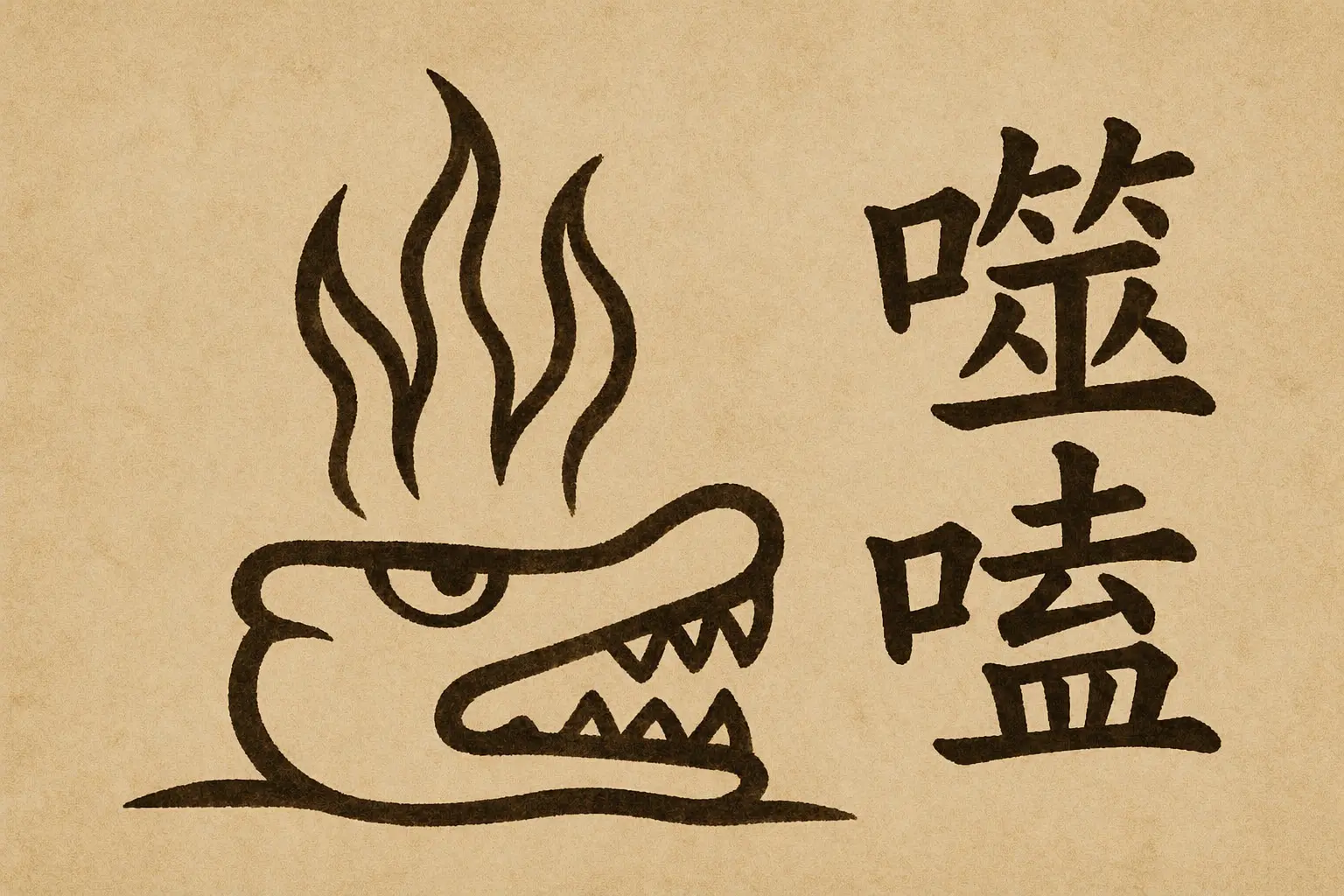
When facing difficulties, be attentive to the hidden. Even poison can teach caution without bringing ruin.
Line 3 of Bite (hexagram 21)
Clarity arises from the separation between the just and the unjust.
In the Chinese calendar, we are in Start of Winter, when “the pheasant enters the water and turns into a great mollusc (蜃)”. The hexagram ruling these days is Bite (21).
The hexagram of these days
21 · Bite 噬嗑
Judgment: Success. It is favorable to administer justice.
The sign of the season
the pheasant enters the water and turns into a great mollusc (蜃) 野雞入水為蜃
Commentary by 吳澄 Wu Cheng, 《月令七十二候集解》 (Yuan dynasty):
雉 is the pheasant (野雞). Zheng Xuan, the 淮南子 and Gao You say the 蜃 is a large mollusc; the 本草 describes a great bivalve that "breathes out vapour forming towers and terraces" — the mirages by the sea (蜃氣). Wu concludes that it is a large clam. The "great water" is the Huai river: "the pheasant enters the Huai and becomes a 蜃" (晉語). [No 化: it does not return to its original form.]
Wu Cheng records the form 雉入大水為蜃.
化 ("to transform") means returning to the earlier form: the hawk becomes a dove and the dove becomes a hawk again; the field mouse becomes a quail and the quail becomes a mouse again. "Rotting grass becomes fireflies", "the pheasant becomes a great mollusc" and "the sparrow becomes a clam" do not use 化: these changes do not return to the original form. (Kong Yingda, quoted by Wu Cheng.)
For students: pillars, solar term and period
On 11/18/2026 (Beijing time), the day is 丙申, in the 己亥 month of the 丙午 year. We are in the solar term 立冬 (Start of Winter), pentad 3 (候): 野雞入水為蜃, “the pheasant enters the water and turns into a great mollusc (蜃)”. In Yixing's Gua Qi, the ruling hexagram is 21, 噬嗑 (Bite).
Each solar term has three 候, periods of about five days named after a sign of nature. Current term: 立冬 (Lìdōng), Start of Winter.
In the first half of its period, the emphasis is on the lower trigram, 震 (Thunder).
噬嗑。亨。利用獄。
It rules from 11/15, 16:16 to 11/21, 18:22 (Beijing time), one of the 60 periods of about six days in the yearly cycle. Rank in the Gua Qi: 卿, minister.
The line of the day runs from 11/17, 16:58 to 11/18, 17:19 (Beijing time).
How we calculate it
The hexagram follows Yixing's Gua Qi (卦氣), in the 大衍曆 calendar (729): starting at the winter solstice, the year is divided into 60 equal periods of about six days, one for each hexagram except the four cardinal ones (坎 震 離 兌), which rule the solar terms line by line. The pillars and the solar term follow the Chinese solar calendar.
The message of the day is one of the hexagram's six lines: its period is divided into six equal parts, from the bottom up, and the line in force at midnight (Beijing time) rules the day.
The solar term and 候 on this page are the astronomical ones, as in the almanacs; the hexagram uses Yixing's mean terms. Near a change of term, the two can differ by up to two days.