I Ching
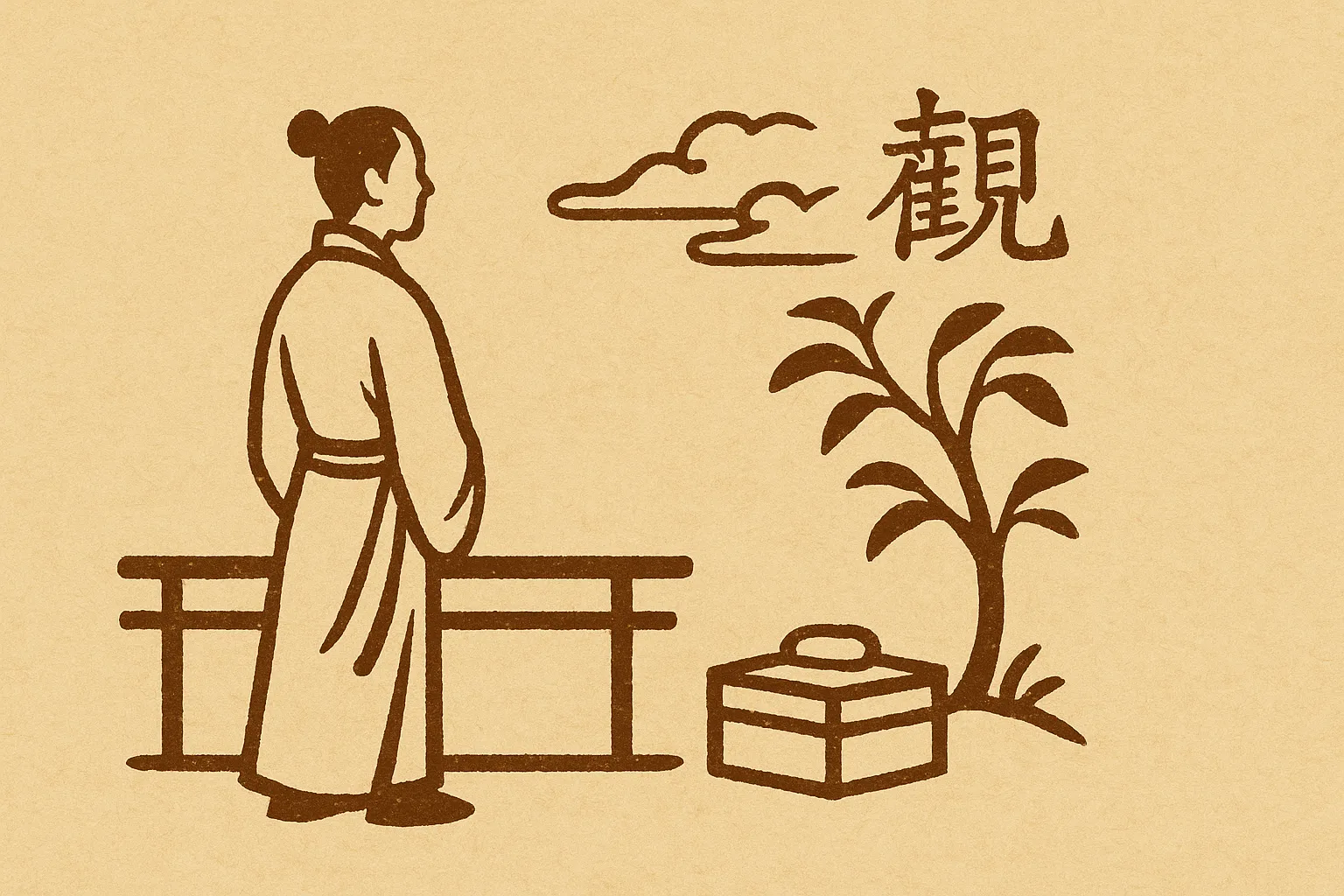
Hexagram 20 — The Contemplation Guan
Published · updated
Classical meaning
After the ablution, but before offering the sacrifice. With sincerity and dignity.
觀。盥而不薦。有孚顒若。
Image: The wind blows over the earth: the image of contemplation. Thus the ancient kings inspected the states and instructed the people.
It represents deep observation, reflection, and inspiration.
- Contemplation
- Reflection
- Vision
- Inspiration
- Introspection
The six lines
Line 1. Childish observation. For the common man, there is no guilt. For the noble man, it is a cause for shame. Avoid superficiality. The wise must cultivate depth and reflection, for shallow insight does not lead to growth.
Line 2. Observation through a slit. It is favorable to the firmness of the woman. When vision is partial, accept the limitation and remain faithful to what is just. Patience preserves harmony.
Line 3. I observe my life, advancing and retreating. Look upon yourself with clarity. Evaluating your own steps brings awareness and strengthens future decisions.
Line 4. Observe the radiance of the realm. It is favorable to be a guest of the king. Observe the examples that elevate the collective spirit. Following good leadership brings harmony and learning.
Line 5. Observe my life. The noble man finds no fault. Examine your actions with sincerity. Honest self-criticism is a source of virtue and brings no regrets.
Line 6. Observe the lives of others. The noble man finds no fault. Learn by observing the lives of others. The wise understand that there are lessons in the destinies of others, and this helps them grow without error.
Related hexagrams
By the structure of its six lines, the tradition reads each hexagram in dialogue with others. These are its classical relatives:
A reading for YOUR situation
3 open consultations free per day — or a custom question.
Start my consultation →